Modernizing MRI Capacity: How Canada’s Healthcare Expansion is Driving Next-Gen Imaging Investments

Submitted by admin on
images
Image
cmri
link
categories
date
Heading
Modernizing MRI Capacity: How Canada’s Healthcare Expansion is Driving Next-Gen Imaging Investments
Description

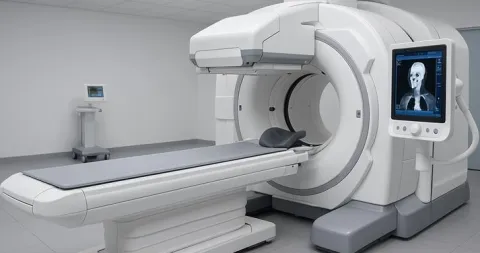
Canada’s MRI market continues to demonstrate strong growth potential as diagnostic demand rises faster than system capacity.

Exam volumes have grown by nearly 30 percent over the past decade and more than doubled since 2007, driven by increasing cancer, cardiac, trauma, and neurological imaging needs. MRI waiting times remain among the longest in the OECD, with Saskatchewan recording delays of up to 186 days in early 2025, reflecting significant variation in access and scanner availability across provinces.


Federal and provincial governments are responding through targeted infrastructure investments, such as Ontario’s approximately USD 113 million initiative for Community Diagnostic Centers and Alberta’s USD 713.5 million  Health Capital Program aimed at expanding imaging capacity. As per Hospital Intel Suite (HiS), Ontario and Quebec account for nearly half of Canada’s installed MRI systems, reflecting their dense populations and strong academic hospital networks. To narrow this gap, western provinces are accelerating modernization and digital upgrades, while Atlantic and northern regions continue to face slower equipment renewal. UHN in Toronto has begun using AI-assisted MRI reconstruction to shorten scan times, while Vancouver General Hospital and BC Cancer have added new 3T MRI units to expand oncology and neurology capacity. 


Canada’s MRI capacity is being reshaped by rising clinical demand and inconsistent equipment renewal cycles. Several provinces continue to record long waiting times, reflecting gaps in system availability. Ontario and Alberta are adding new diagnostic infrastructure through targeted investment programs. Leading centers in Toronto and Vancouver have introduced AI-assisted reconstruction and new 3T units to support growing oncology and neurology workloads. Regional and mid-sized hospitals are also beginning to replace aging scanners through active provincial procurement. These developments indicate steady movement toward broader modernization and wider adoption of advanced MRI technology across Canada.
India SPECT Market: Tier-2 Cities Signal the Next Growth Wave for India’s SPECT/CT Market

Submitted by admin on
images
Image
si
link
categories
date
Description

India’s hybrid imaging landscape is entering a pivotal expansion phase as the incidence of cancer and cardiac diseases rises beyond major metropolitan areas. National programs under Ayushman Bharat as well as Pradhan Mantri–Ayushman Bharat Health Infrastructure Mission (PM-ABHIM), and the expansion of state cancer institutes are pushing hospitals toward more reliable functional imaging. addresses this need by offering a cost-effective alternative in areas with limited PET access. This makes it particularly valuable in secondary cities preparing for larger oncology and cardiology caseloads.


As per Hospital Intel Suite (HiS), India exhibits a distribution pattern shaped by both capacity and limitation. South and West India accounts for a far larger share of the country’s SPECT/CT footprint than the East, Central, and Northeast combined. Private hospitals operate a significantly greater portion of hybrid systems than public centers, reinforcing the dominance of dominance of oncology networks in metropolitan cities. Nearly all installations sit within tertiary hospitals, while secondary facilities contribute only a marginal presence. This configuration creates long referral chains from tier-2 and tier-3 districts into major cities, highlighting where future access must expand as regional hospitals scale their cancer as well as cardiac care  services.


Growing momentum in tier-2 cities is reshaping India’s nuclear medicine market. Hospitals in Jaipur, Lucknow, Coimbatore, and Visakhapatnam are increasingly prioritizing hybrid imaging solutions that offer strong diagnostic capability while maintaining manageable isotope logistics. Demand focuses on mid-range SPECT/CT systems, structured vendor training, and reliable service support. Radiopharmacy partnerships and workflow integration are becoming essential as hospitals handle higher complexity with limited metro-level staffing. Vendors offering equipment, radiotracer access planning, uptime guarantees, and AI-enabled quantification will be best positioned to drive  India’s nuclear medicine expansion and strengthen presence in emerging regional hubs.

Belgium Mammography Market: Data-Driven Screening Expansion Across a Private-Led Network

Submitted by admin on
images
Image
bm
link
categories
date
Description

Belgium’s 2024–2025 screening reforms are aimed to modernize breast-cancer detection through digital upgrades, AI-supported reading, and broader outreach. Screening demand continues to rise as early-stage detection improves and the population ages. The Belgian Cancer Registry data (2024) and the 2025 EU Country Cancer Profile confirm persistent regional differences in participation. Flanders achieves higher uptake through its organized call-recall program, while Wallonia as well as Brussels rely on opportunistic screening, resulting in lower and less consistent coverage. These gaps reinforce the need for continued investment in digital mammography and AI-enabled workflows.


As per Hospital Intel Suite (HiS), Belgium’s mammography network is predominantly driven by private hospitals by private hospitals . Private facilities operate well over two-thirds of Belgium’s mammography units, creating a dominant screening corridor across Antwerp, Brussels, and the Flemish provinces. Public hospitals account for a much smaller share, reinforcing private sector leadership. Secondary hospitals manage a sizable portion, forming Belgium’s community screening layer. Tertiary networks maintain the largest overall concentration, reflecting strong oncology and breast-surgery demand. University hospitals add specialized capability for complex cases. Lower-density provinces, such as Namen and Luxembourg, exhibit far lower penetration, linked to smaller hospital counts. This uneven distribution drives higher referral volumes to Antwerp and Brussels during peak screening periods.


High-density regions with a strong presence of private medical facilities are upgrading rapidly to digital platforms and AI-supported reading to handle increasing early-detection workloads. Smaller provinces such as Namen and Luxembourg face slower replacement cycles, which increases referral flow to Antwerp and Brussels during peak screening periods. These regional differences are accelerating a new wave of investment aimed at improving image quality, supporting mobile screening coverage, and strengthening access in provinces with lower penetration. As these upgrades advance, Belgium’s mammography market is set for steady growth, driven by screening modernization and the need for more consistent diagnostic performance across all regions.

United Kingdom SPECT Market: Precision Renewal-How SPECT/CT Is Reinforcing the UK’s Diagnostic Backbone

Submitted by admin on
images
Image
UK M1
link
categories
date
Description

The U.K. is entering a new phase of nuclear medicine renewal as hybrid imaging becomes essential to national diagnostic reform. Both the 2024-2025 Diagnostics Recovery Plan and the Community Diagnostic Center expansion push for faster cardiac and oncology pathways. These initiatives aim to cut delays in myocardial perfusion, bone-disease evaluation, and endocrine assessment. SPECT/CT fits this mandate, backed by its ability to offer broad functional imaging without the infrastructure demands of PET. This makes it a practical tool for regions facing rising referral volumes.


As per Hospital Intel Suite (HiS), most SPECT/CT activity is anchored in London, Manchester, and Birmingham, where large NHS trusts run dense nuclear medicine services. These regions account for more than 70 percent share of hybrid capacity. While smaller hubs in the Northwest, Yorkshire, and Scotland support moderate access, they depend heavily on referrals into major cities. Private operators play a significant role in England’s urban regions, offering flexible scheduling and absorbing cases from high-pressure NHS departments. This creates a system in which hybrid imaging capacity mirrors population density, tracer supply, and the distribution of specialist teams.


Hospitals are replacing older gamma-camera fleets with modern hybrid systems. These platforms offer higher accuracy, shorter workflows, and more reliable throughput during peak demand. Trusts are also seeking systems with AI-supported reconstruction and dose tracking features. These tools help meet national productivity targets and strengthen radiation-governance practices. Private partners can extend capacity in oversubscribed regions, easing pressure on NHS services. Community Diagnostic Centers (CDC) are adopting compact hybrid systems to support cardiac and oncology triage. Aligning equipment renewal with regional access gaps, aging equipment, and the growing clinical-pathway demand will build more resilient hybrid-imaging services, reinforcing the U.K.’s diagnostic-modernization agenda.

Precision and Portability: Canada’s Ultrasound Market Aligns with National Diagnostic Modernization Goals

Submitted by admin on
images
Image
cu
link
categories
date
Description

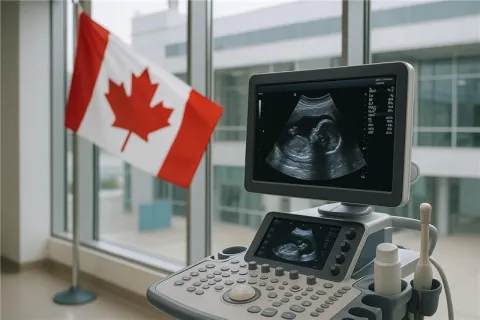
Canada’s ultrasound market is expanding rapidly, driven by rising demand in women’s health and cardiology. Over the past five years, scan volumes have risen steadily with the increase in the rates of heart failure, ischemic heart disease, and maternal care needs, particularly among adults over 60. According to Canadian Institute for Health Information (CIHI), obstetric and gynecologic ultrasound remains the most commonly performed  imaging exam nationwide, reflecting its pivotal role in preventive and diagnostic care.


Building on the momentum, federal and provincial governments are ramping up investment in imaging infrastructure. In 2024, Canada and Nova Scotia launched a three-year USD 253.4 million plan to modernize healthcare, covering ultrasound and X-ray upgrades. British Columbia advanced facility renewals through the Provincial Health Services Authority’s health capital program. Ontario’s USD 110.6 million initiative for Community Diagnostic Centers (CDC) further expanded digital imaging capacity across hospitals and clinics. These programs are enabling hospitals to replace aging systems as well as upgrade to portable and high-resolution ultrasound platforms. However, despite modernization, access remains uneven. Smaller and northern communities continue to depend on mobile imaging units and teleradiology networks to fill service gaps. As per Hospital Intel Suite (HiS), ultrasound capacity varies widely across regions.  Although British Columbia has strong coverage in metropolitan areas, it relies on mobile units to serve inland and island communities. Prairie and Atlantic provinces continue to experience slower system renewal and limited equipment availability.


Recent provincial investments and shifting clinical workloads are shaping ultrasound renewal across Canada. Mid-sized and regional hospitals are replacing older systems to manage rising women’s health and cardiac imaging volumes. Ontario, British Columbia, and Nova Scotia are driving much of the new demand for portable and high-resolution units. Smaller and northern communities continue to depend on mobile services and teleradiology, highlighting persistent gaps in permanent capacity. These factors indicate where modernization is advancing and where replacement needs remain the highest.

Malaysia X-Ray Market: Data-Driven Expansion for a Stronger Diagnostic Network

Submitted by admin on
images
Image
mx
link
categories
date
Description

Malaysia’s diagnostic ecosystem is entering a critical transformation phase as respiratory disease, trauma, and chronic illness es continue to increase across the country. Hospital admissions for acute respiratory conditions have increased by more than one-fifth over the past five years, placing heavier reliance on fast X-ray pathways for frontline triage. The Health White Paper (2023-2027) and Public Healthcare Digitalization Phase II (2024-2025) now position radiography modernization as a national priority, aiming to reduce delays in district hospitals and strengthen access across Sabah, Sarawak, and the East Coast. These reforms reflect Malaysia’s push to build a more equitable imaging backbone capable of supporting escalating diagnostic demand.


As per Hospital Intel Suite (HiS), X-ray footprint is shaped by strong regional contrasts as more than 70 percent of national units sit within secondary hospitals, forming the country’s core diagnostic layer. Tertiary hubs in Selangor and Johor show concentrated deployment, yet their scale differs sharply. Selangor maintains far higher penetration than Johor despite similar population needs. Sabah and Sarawak depend heavily on public-sector radiography due to geography and long travel distances. Primary hospitals contribute only a small fraction of national capacity, reinforcing referral dependence across several districts.


Malaysia’s radiography requirements are becoming more defined as imaging utilization increases across major hospitals and remote districts. Urban states are rapidly transitioning to digital X-ray systems to improve emergency response and manage the rising burden of chronic diseases. In contrast, regions such as Sabah, Sarawak, and the northern corridor continue to contend with aging infrastructure and geographical constraints. These gaps are prompting a nationwide renewal strategy centered on stable, power-efficient platforms suited to varied clinical environments. As replacement cycles accelerate, the X-ray market is expected to experience steady growth, supported by rising demand for faster triage, enhanced respiratory imaging, and more resilient diagnostic capacity across the country.

India X-Ray Market : The Universal Diagnostic Foundation Under Heavy Secondary-Care Load

Submitted by admin on
images
Image
xr
link
categories
date
Description

X-ray remains the most widely used imaging modality in India, supporting high-volume pathways for TB, pneumonia, trauma, orthopedics, and emergency care. National programs, such as National Tuberculosis Elimination Program (NTEP) for TB elimination, Ayushman Bharat-Health and Wellness Centers (AB-HWCs), and digital health integration, expand the need for fast, portable radiography at every level of the healthcare system. Rising respiratory illnesses, in addition to growing outpatient demand, push hospitals toward broader and more reliable digital X-ray capability.


As per Hospital Intel Suite (HiS), India demonstrates near-universal X-ray penetration nationwide. However, distribution patterns remain uneven. The private sector holds a share roughly three times larger than the public sector This makes private clinics and diagnostic centers the primary access points for most citizens. Southern states maintain the highest radiography density, with Karnataka, Tamil Nadu, and Kerala collectively operating far more units than central and northeastern regions. Secondary hospitals form the backbone of India’s radiography network, housing the majority of units across all zones. Tertiary hospitals in the South have the highest concentration of X-ray rooms, reflecting their advanced emergency and specialty workloads.


India’s X-ray landscape is shaped by rising respiratory and outpatient demand, uneven regional capacity, and heavy reliance on the private sector. Poor air quality in cities such as Delhi and Mumbai is driving more cases of pneumonia, chronic obstructive pulmonary disease (COPD), and other pulmonary conditions. Southern states have the highest system density, while central and northeastern regions remain underserved. While secondary hospitals form the backbone of radiography services, tertiary centers handle complex emergencies. These trends are accelerating adoption of digital and portable X-ray systems, supporting faster triage as well as more resilient diagnostic coverage nationwide.

image
Medical Imaging

OPTIMIZING VENTILATOR GTM STRATEGY ACROSS AFRICA

Client: Leading respiratory care and ventilation systems manufacturer 

Challenge Statement: The client aimed to consolidate its market presence across key African markets but lacked visibility into ICU infrastructure, ventilator penetration, and the availability of skilled clinical personnel. Inadequate information on the distribution of Level 1–3 ICUs, neonatal care facilities, intensivists, anesthesiologists, and biomedical support resources made it difficult for them to craft an effective GTM and channel partner strategy. 

How Hospital Intel Suite Helped: Hospital Intel Suite provided a complete mapping of ICU facilities across major African countries, including bed capacities, ICU level stratification, and the installed base of invasive ventilators. Our insights detailed the availability of intensivists, anesthesiologists, respiratory therapists, and other allied professionals at a hospital level.

Additional customizations were performed for the client – specifically with regards to market size estimates for invasive mechanical ventilators, neonatal ventilators, and related categories, enabling the client to model product need with precision. Utilizing our Precision Consulting services, the client built a hospital-level ventilator need assessment model and recalibrated its GTM strategy based on facility readiness, regional demand clusters, and competitive gaps-ensuring stronger commercial alignment and improved regional penetration.

image
Medical Imaging

UNDERSTANDING THE TRUE MARKET POTENTIAL FOR DIALYSIS EQUIPMENT IN ASEAN

Client: Global medical device company specializing in Dialysis Machines 

Challenge Statement: The client, a fast-growing leader in renal care technology, sought to strengthen its expansion efforts across the ASEAN region. However, the absence of reliable and consolidated data on dialysis penetration, nephrologist distribution, installed base, and treatment capacity across countries made it challenging for them to estimate the real addressable market. The company needed accurate insights to prioritize markets, refine demand projections, and develop market-specific investment strategies. 

How Hospital Intel Suite Helped: Hospital Intel Suite mapped the dialysis infrastructure across major ASEAN countries, providing hospital-level penetration of dialysis units, and the presence of nephrologists. Our platform delivered country-wise and hospital-wise installed base of dialysis machines, enabling estimation of replacement demand and new unit potential. Additionally, detailed market sizing helped validate and refine their internal projections, giving them clarity on the total addressable market. 

By integrating specialty data with infrastructure metrics, the client improved its visibility into renal care readiness across the region, enabling more precise commercial planning, targeted marketing efforts, and improved sales forecasting.

image
Medical Imaging

ASSESSING MARKET POTENTIAL FOR CRITICAL CARE EQUIPMENT IN MIDDLE-EAST

Client: Leading manufacturer of ICU devices 

Challenge Statement: The client is a leading manufacturer and supplier of critical care devices such as Ventilators and Patient monitors. Our client was looking to map its opportunity to sell various digitally enabled offerings across hospitals having ICU infrastructure. 

How Hospital Intel Suite helped: Our platform was used to customize and generate actionable insights for our client across Middle-east. Hospital Intel Suite’s core data was used to generate information around the total available market (TAM) for ICU based devices across Bahrain, Kuwait, Qatar, Saudi Arabia, UAE and Turkey (among others). The penetration of ICUs across individual hospitals as well as the size and sub- specialties of critical care (including NICU, PICU, surgical ICUs, medical ICUs, CCUs and HDUs) was evaluated. The type of infrastructure including penetration of patient monitors, ventilators as well as other maternal and child-care products was assessed.  

The client also leveraged our Precision Consulting Services to further assess the impact of COVID-19 on the critical care infrastructure of individual countries. The insights were further customized to allow assess opportunity pockets through visual heat maps across the countries. Utilizing our platform, our client was able to take data-driven decisions to decisions around strengthening its field forces as well as launching its digitally enabled ICU products for individual customer segments.

Subscribe to Medical Imaging